


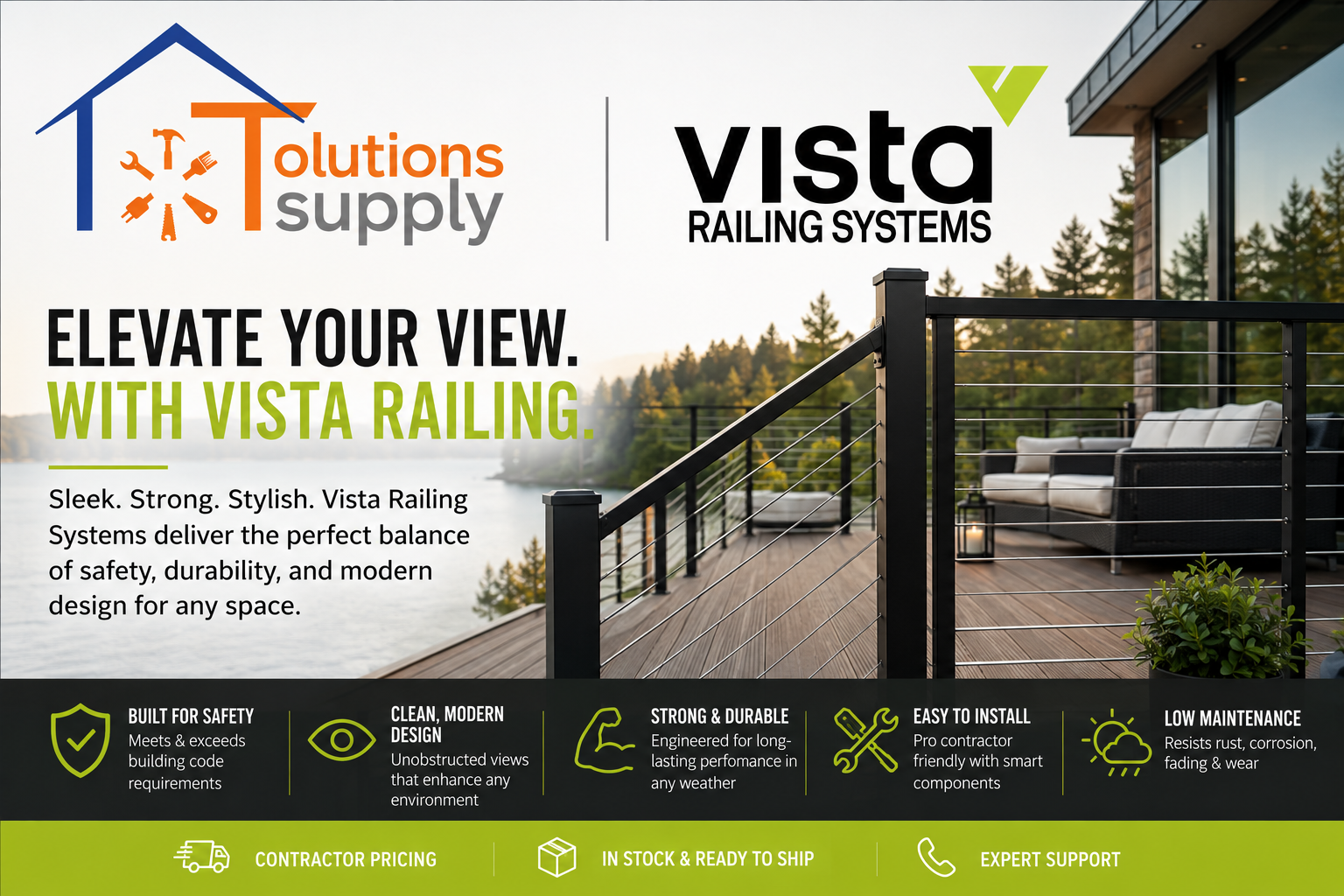
A deck railing is not just a finishing detail. It is a safety system, a design feature, and one of the most visible parts of an outdoor living project. The right railing can protect guests, preserve views, complement composite or wood decking, and give a deck the finished, professional look customers expect. The wrong railing can create code problems, installation delays, maintenance headaches, and a design that feels out of place.
Vista Railing Systems are built for buyers who want a clean, durable, low-maintenance railing solution without turning the project into a custom fabrication exercise. Available in aluminum picket, wide picket, framed glass, cable rail, posts, brackets, stair components, gates, drink rail adapters, and accessories, Vista gives contractors a coordinated system for decks, balconies, patios, porches, and commercial outdoor spaces.
At Tolutions Supply, Vista fits the same buying philosophy we use across premium building materials: practical products, contractor-friendly sourcing, clean jobsite results, and support from people who understand how these systems are installed in the field. For current product availability and project planning, contractors can shop Vista railing systems or pair railing orders with high-quality fasteners for a more complete deck package.
Key Takeaways
· Vista railing is a coordinated aluminum railing platform with options for pickets, wide pickets, framed glass, cable railing, stairs, gates, drink rail adapters, and accessories.
· Aluminum railing is popular because it is durable, low maintenance, corrosion resistant, and visually cleaner than bulky wood railing.
· Glass railing is best when the view is the design priority; cable railing is ideal for a modern look with open sightlines; picket railing is the most traditional and budget-conscious option.
· Railing performance depends on the entire assembly, including post layout, blocking, fastening, stair transitions, code requirements, and installation accuracy.
· Contractors should confirm local code requirements and review manufacturer installation instructions before ordering or installing any railing system.
What Is Vista Railing?
Vista Railing Systems is a railing manufacturer known for aluminum and glass railing systems used in residential and light commercial outdoor applications. The company offers a broad lineup of deck railing products, including aluminum picket rail, glass rail, cable rail, wind wall options, stair railing components, posts, brackets, gates, and supporting accessories. Vista's own product resources emphasize aluminum and glass systems for safer, cleaner, more attractive outdoor spaces, and its learning center includes installation instructions, test reports, post mounting guidance, product literature, and warranty information.
For contractors, the value is systemization. Instead of mixing unrelated posts, rails, brackets, infill, and accessories, a coordinated railing platform helps reduce guesswork. That matters on real jobs, especially when the deck has stairs, corners, gates, mixed railing types, or customers who want a drink rail surface that integrates with the railing design.
Before final specifications are approved, it is smart to review the manufacturer's Vista installation instructions and technical resources and confirm applicable guard and handrail requirements with the local building department.
Why Contractors and Homeowners Choose Aluminum Railing
Traditional wood railing can look good when new, but it is vulnerable to checking, splitting, paint failure, loose balusters, and long-term maintenance. Composite railing solves some of those problems, but it can be bulkier than aluminum and may not offer the same crisp, architectural lines. Aluminum railing has become a preferred choice because it combines strength, weather resistance, slim profiles, and low upkeep.
Vista aluminum railing is especially useful on projects where the owner wants a finished appearance without the ongoing cycle of sanding, staining, and repainting. The powder-coated finish options also make it easier to coordinate with composite decking, modified wood decking, PVC trim, siding, window frames, and exterior hardware.
Vista Railing Options: Which Style Fits the Project?
The best railing choice depends on the application, budget, view, design style, and maintenance expectations. Vista's platform gives buyers several practical directions.
Regular Picket Railing
Best for traditional decks, porches, stairs, and projects where code compliance, cost control, and a timeless appearance matter most. Picket railing works well for suburban decks, multifamily balconies, and projects where the view is not the primary selling point.
Wide Picket Railing
Best for a bolder aluminum railing look. Wide pickets create stronger visual lines and can feel more modern than standard pickets while still maintaining the simplicity of vertical infill.
Framed Glass Railing
Best for lake homes, scenic lots, rooftop decks, outdoor dining spaces, and upper-level balconies where preserving the view is critical. Tempered glass panels create a refined, high-end appearance while maintaining a physical guard.
Cable Railing
Best for contemporary designs, waterfront decks, modern homes, and projects where the customer wants openness without using glass. Stainless steel cables provide a clean horizontal look, but cable layout, tensioning, and post spacing require careful planning.
Drink Rail Adapter
Best when the homeowner wants a functional ledge for beverages or a cap board that ties the railing into the deck surface. It can create a more substantial top detail without losing the clean look of aluminum railing.
Vista Railing Comparison Table
|
Railing Type |
Best Use |
View Quality |
Maintenance |
Key Consideration |
|
Regular picket |
Decks, porches, stairs, multifamily |
Moderate |
Low |
Most traditional look |
|
Wide picket |
Modern decks and bolder elevations |
Moderate |
Low |
Stronger visual profile |
|
Framed glass |
Scenic views, waterfront, rooftops |
Excellent |
Low to moderate |
Glass cleaning and panel planning |
|
Cable rail |
Modern homes and open sightlines |
Very good |
Low to moderate |
Cable tensioning and spacing |
|
Drink rail |
Entertainment decks and outdoor kitchens |
Depends on infill |
Low |
Coordinate cap material and adapters |
Code and Safety Considerations: Do Not Treat Railing as Decoration
Railing is often called railing in everyday language, but building codes typically use the term guard when the assembly protects against a fall from an elevated walking surface. Code requirements vary by jurisdiction, occupancy type, deck height, stair configuration, and local adoption of model codes. A residential deck may have different guard height and stair handrail requirements than a restaurant patio, apartment balcony, or commercial exterior stair.
The International Code Council publishes model codes used by many states and municipalities, and the International Residential Code handrail and guard provisions are a useful starting point for understanding how stair handrails and guards are regulated. For wood-framed decks, the American Wood Council deck construction guide is another valuable reference because it illustrates deck framing, stairs, guard post attachment concepts, and load path considerations.
The practical takeaway is simple: the railing system is only as good as the structure it is attached to. Posts need proper support. Guard loads must transfer into the deck framing. Blocking, rim joists, fascia conditions, stair geometry, fasteners, and substrate condition must be evaluated before installation. On remodels, do not assume the existing deck frame is suitable just because it held the old railing.
Planning a Vista Railing Order
A clean railing installation starts before material is ordered. Contractors should field-measure the deck, identify level runs, stair runs, corners, gates, post locations, transitions, and any mixed infill areas. Then match those conditions to the correct posts, rail packages, brackets, glass packages, cable components, stair parts, and accessories.
Practical Example 1: Composite Deck With Picket Railing
A homeowner replacing a pressure-treated deck with composite decking wants a durable, budget-conscious railing that will not require repainting every few years. Regular picket Vista railing is a strong fit. The design remains familiar, the aluminum profile is cleaner than wood, and the low-maintenance finish supports the homeowner's goal of reducing seasonal upkeep.
Practical Example 2: Lake House With Glass Railing
A lakefront property owner wants the railing to disappear as much as possible from the primary outdoor seating area. Framed glass railing is the better fit than picket railing because it preserves the water view while still defining the deck perimeter. In this case, the contractor should pay close attention to glass panel sizes, post layout, wind exposure, cleaning expectations, and whether a drink rail detail is desired.
Practical Example 3: Modern Rooftop Deck With Cable Rail
A modern rooftop deck needs a sharp, open look without large glass panels. Cable railing can deliver that design language, but the contractor needs to plan cable runs, corner conditions, tensioning, post spacing, and stair transitions carefully. Cable railing is not difficult for experienced installers, but it rewards precision.
Installation Best Practices
· Confirm the local code requirements before finalizing the layout.
· Use the manufacturer installation instructions for the exact Vista railing style and component package being installed.
· Check the deck frame before installation; repair weak rim joists, inadequate blocking, rot, or loose framing first.
· Plan post locations around stairs, corners, gates, glass panel sizes, cable runs, and deck board layout.
· Use compatible fasteners and hardware, especially in exterior and coastal environments.
· Protect powder-coated finishes during staging, cutting, assembly, and cleanup.
· Verify plumb, level, rail height, and opening limitations before calling the job complete.
Maintenance Expectations
One of the main reasons buyers choose Vista aluminum railing is reduced maintenance. In most environments, routine cleaning with mild soap, water, and a soft cloth or brush is enough to remove dust, pollen, dirt, and general outdoor buildup. Glass panels may need more frequent cleaning because fingerprints, water spots, and pollen are more visible on glass than on pickets or cable.
Avoid abrasive pads, harsh solvents, or aggressive pressure washing that could damage finishes or gaskets. In coastal or high-exposure environments, more frequent rinsing is prudent because salt, deicing chemicals, and airborne contaminants can accelerate wear on exterior metals and finishes.
Vista Railing vs. Wood Railing
Wood railing can be appropriate on some projects, especially where the design calls for traditional carpentry or matching wood details. But for most homeowners who want low maintenance, aluminum railing is easier to own. Wood railing requires periodic coating maintenance, can split or warp, and often looks tired before the decking itself is ready for replacement. Vista aluminum railing offers a cleaner long-term path: stable components, factory finishes, coordinated accessories, and multiple design options without the upkeep of painted wood.
Who Should Buy Vista Railing?
Vista is a strong fit for deck builders, remodelers, general contractors, multifamily maintenance teams, architects, designers, and homeowners who want a professional-grade railing system rather than a commodity big-box solution. It is especially useful when the project requires a mix of level rail, stair rail, gates, glass, cable, or drink rail details and the buyer wants the parts to work together as a system.
Natural CTA
Planning a deck, balcony, porch, or outdoor living project? Tolutions Supply can help you source the right Vista railing components, coordinate railing with decking and fasteners, and prepare a cleaner material order before the crew is on site. Contact Tolutions Supply for current availability, contractor pricing, and project support.
Frequently Asked Questions About Vista Railing
Is Vista railing good for exterior decks?
Yes. Vista railing systems are designed for exterior deck, balcony, porch, and patio applications. Choose the correct system, follow manufacturer instructions, and confirm local code requirements.
Is aluminum railing better than wood railing?
For many modern decks, yes. Aluminum railing typically requires less maintenance, resists rot and insect damage, and provides a cleaner long-term appearance than painted or stained wood railing.
Should I choose glass railing or cable railing?
Choose glass railing when preserving the view is the top priority and the owner accepts occasional glass cleaning. Choose cable railing for a modern, open look with slimmer visual lines and no large glass panels.
Can Vista railing be used on stairs?
Yes. Vista offers stair railing components, but stair layouts must be measured carefully. Stair pitch, post locations, rail height, and handrail requirements should be reviewed before ordering.
Does railing need to meet building code?
Yes. Guard and handrail requirements vary by jurisdiction, deck height, occupancy, and stair configuration. Always confirm requirements with the local authority having jurisdiction.
What colors are available?
Availability may vary by product, but Tolutions Supply listings show common Vista finish options such as textured black, white, textured bronze, and textured grey on select components.
Can I add a drink rail to Vista railing?
Yes, compatible drink rail adapters are available for select Vista systems. This is a good option for entertainment decks, outdoor kitchens, and owners who want a functional top rail detail.
Where can I buy Vista railing?
Vista railing components are available through Tolutions Supply, including posts, rail packages, brackets, glass components, cable rail parts, gates, and accessories.


