


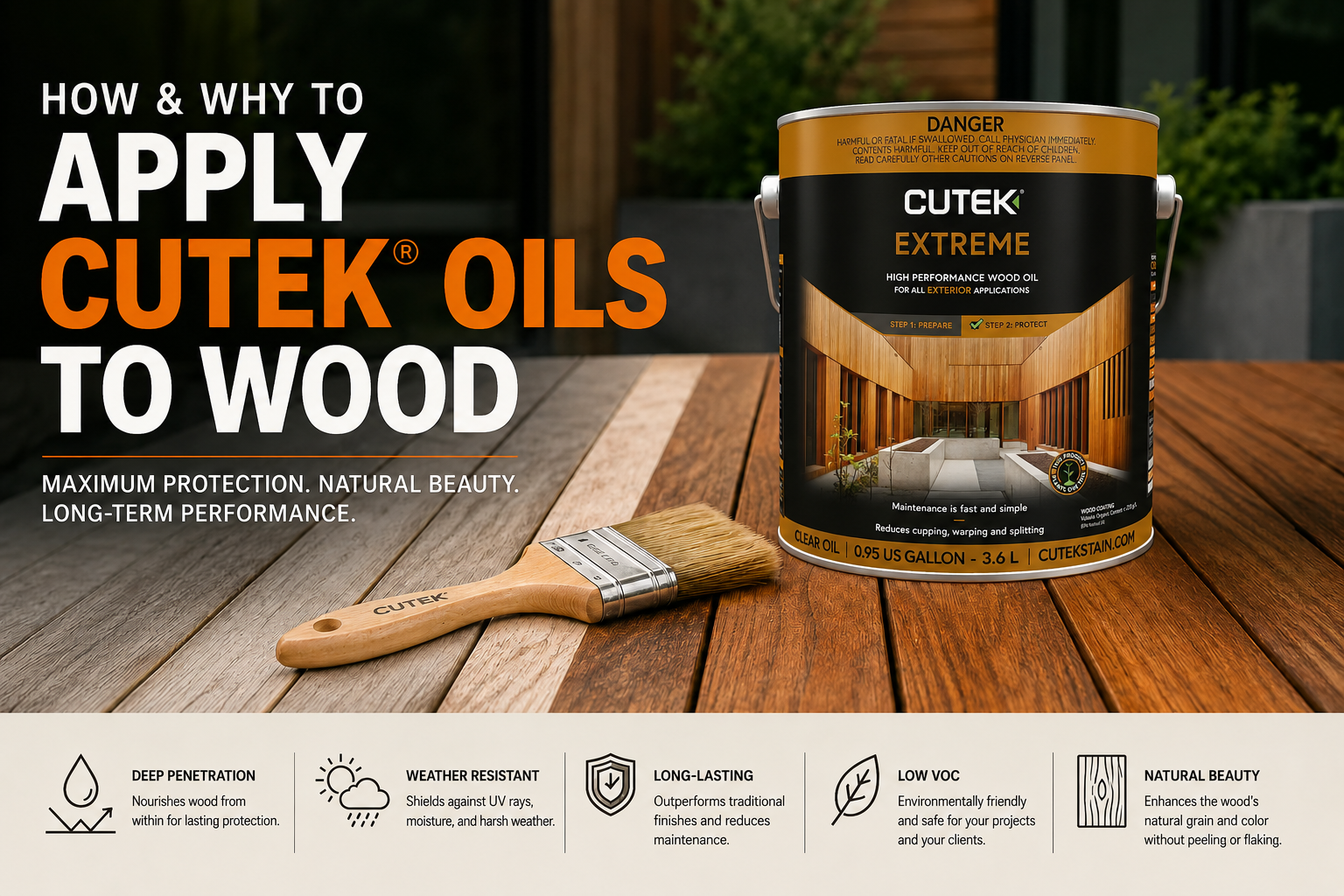
For contractors, exterior wood is only as good as the system used to protect it. Decking, cladding, pergolas, soffits, privacy screens, docks, benches, and exterior millwork all face the same jobsite enemies: moisture movement, ultraviolet exposure, seasonal expansion and contraction, callbacks, and homeowner expectations that the finished project will look good for years. CUTEK oil gives contractors a practical way to protect wood while preserving the natural character that made the material worth specifying in the first place.
CUTEK Extreme is designed as a penetrating oil system. The goal is not to create a plastic-looking surface layer. The goal is to get oil into the wood, help control moisture movement, reduce the chance of cupping, checking, splitting, and warping, and make future maintenance easier. That matters on real jobs because the exterior envelope does not stay static. Boards move. Fasteners penetrate the surface. Ends get cut. Sun exposure varies from elevation to elevation. Homeowners drag furniture, grills, planters, and snow shovels across decks. A coating system that fails by peeling can turn into a labor-heavy sanding and stripping problem. A penetrating oil system gives the contractor a cleaner maintenance story.
Tolutions Supply carries exterior wood products and finishes for contractors who need dependable material, clear application guidance, and fast local support. For wood decks, cladding, exterior accents, and other exposed applications, CUTEK is often the right conversation to have before the first board is installed, not after the project starts to weather.
Why Exterior Wood Needs More Than a Pretty Finish
Exterior wood protection is not just about color. Color is what the customer notices first, but moisture is usually what causes the expensive problems. Wood expands when it takes on moisture and contracts as it dries. On a deck, that movement can show up as raised grain, cupping, end checking, surface cracking, fastener stress, and uneven weathering. On cladding or soffit work, the same movement can affect alignment, joints, and appearance.
A contractor-friendly finish should help the wood perform while also keeping the finished look easy to service. That is where CUTEK oil fits well. CUTEK’s system is built around a prepare-and-protect approach: clean or restore the wood first, then apply oil so it can penetrate and stabilize the material. The manufacturer describes CUTEK clear oils as protection that works from within the wood, with correct application helping long-term protection without flaking or peeling.
That distinction matters when you are pricing work. A low-cost coating that looks good on day one but fails by peeling can create a future labor problem. A penetrating oil that can be cleaned and recoated gives the contractor a simpler maintenance cycle to explain to the owner.
Main Benefits of CUTEK Oil for Contractors
The biggest benefit is dimensional stability. CUTEK Extreme penetrates into the wood and helps control moisture movement. For contractors, that can mean fewer appearance complaints related to checking, cupping, splitting, and seasonal movement. No finish can stop wood from acting like wood, but the right oil can help reduce the severity of moisture-driven movement.
The second benefit is the natural look. Many homeowners and designers choose wood because they want grain, warmth, and depth. A heavy film can hide the character of premium wood. CUTEK oil highlights the grain and produces a natural, matte appearance instead of a thick surface coating. This is especially useful on premium exterior woods, architectural cladding, screens, and high-end deck work.
The third benefit is serviceability. Because CUTEK is not intended to build a brittle surface film, maintenance is usually more straightforward than a coating that peels. In many cases, the maintenance process is clean and recoat rather than strip, sand, and restart. That makes it easier for contractors to sell maintenance packages and protect their reputation after the initial install.
The fourth benefit is color control. Clear oil will allow wood to naturally silver over time from UV exposure. If the customer wants to hold a more specific tone, CUTEK Colortones can be added to CUTEK Extreme to improve color retention. This is an important expectation-setting point. Oil is for moisture control and wood stabilization; tint is what helps with UV color management.
The fifth benefit is flexibility across applications. Contractors can use CUTEK on exterior decking, cladding, pergolas, screens, soffits, exterior trim, and other timber features, provided the substrate is suitable and properly prepared. That gives crews one system they can become familiar with instead of switching products on every project.
When to Recommend CUTEK Oil
CUTEK is a strong recommendation when the customer wants real wood to look like real wood. It is a good fit for premium decks, exterior cladding, privacy screens, outdoor living structures, custom benches, soffits, gates, and architectural accents. It is also useful when the contractor wants to avoid a future peel-and-strip maintenance cycle.
It is especially worth discussing when working with thermally modified wood, hardwood, softwood, pressure-treated lumber, and specialty exterior materials where moisture control and appearance both matter. As with any coating, always confirm compatibility with the exact species, prior treatments, adhesives, and jobsite conditions. For unusual substrates, samples are smart. On larger or high-visibility projects, a pre-finished sample board can prevent color surprises and create a better approval process with the owner or designer.
Step 1: Inspect the Wood Before You Open the Can
Good CUTEK results start before the oil is applied. Contractors should inspect the substrate for moisture, contaminants, mill glaze, old coatings, mold, dirt, tannin staining, and jobsite dust. The wood should be clean, non-greasy, and dry. CUTEK’s technical guidance states that wood should have moisture content under 17% before application, and the manufacturer cautions against applying CUTEK Extreme to exterior wood if rain is likely within 48 hours.
That means a moisture meter should be part of the process, not an optional extra. Guessing by touch is not enough, especially on shaded decks, dense wood, recently washed surfaces, or material stored outdoors. If the wood is too wet, oil penetration and drying can be affected. If the surface is contaminated, the finish can look blotchy or fail to perform as expected.
Step 2: Prep New, Weathered, or Previously Coated Wood Correctly
New wood is not automatically ready for oil. It may have mill glaze, handling marks, construction dust, or moisture from storage. Weathered wood may need cleaning or reviving before oil. Previously coated wood requires extra attention because old film coatings can block penetration. If oil cannot get into the wood, it cannot do its job.
For new or lightly dirty wood, cleaning may be enough. For gray, stained, or weathered wood, a wood reviver may be needed to restore the surface before oiling. For old coatings, stripping and sanding may be required to remove the barrier. This is where contractors should be direct with customers: prep is not a corner to cut. It is the difference between a professional finish and a callback.
Adjacent surfaces also need protection. Oil and cleaning products can stain or affect concrete, painted surfaces, flashing, glass, pavers, and other finished materials. Masking, drop cloths, careful staging, and cleanup should be built into the estimate.
Step 3: Choose Clear Oil or Colortone
CUTEK Extreme Clear Oil protects the wood while allowing natural weathering. That means the wood can still silver over time from UV exposure. For some projects, that is the desired look. For others, the customer wants the color to stay warmer, darker, or closer to the original tone.
When color retention matters, use CUTEK Colortones with CUTEK Extreme. The tint helps with UV exposure and allows the contractor to guide the final appearance. This is not a place to improvise with third-party pigments. CUTEK’s technical information says to use only CUTEK Colortones in CUTEK products because the products are designed to work together.
For contractors, the practical move is simple: always make a sample. Apply the actual oil and color tone to the actual wood, let it absorb and dry, and review it in natural light. Wood species, texture, porosity, age, and sanding profile can all change the final appearance.
Step 4: Apply CUTEK Oil Like a Pro
Application should be controlled, even, and patient. Stir the product thoroughly, especially if a Colortone has been added. Apply to clean, dry wood using the method appropriate for the project: brush, pad, roller, lambswool applicator, or other approved tool. Work the oil into the surface and avoid leaving heavy puddles or lap marks.
Pay close attention to end grain, cut ends, edges, notches, penetrations, and field cuts. These are areas where wood can absorb moisture aggressively. On decks, plan the sequence so crews do not trap themselves or walk through wet oil. On vertical cladding, manage drips and overlaps carefully. On screens and battens, consider finishing before installation when access will be difficult later.
Do not rush the second coat. CUTEK notes that applying a second coat too quickly, especially in cold conditions, can delay drying because the product dries by diffusing into the wood. Cold weather can also increase viscosity and slow diffusion. CUTEK Extreme can be applied at temperatures as low as 40 degrees F, but contractors should still plan around temperature, drying time, and weather windows.
Step 5: Build Maintenance Into the Sale
The best contractors do not sell oiling as a one-time task. They sell a wood care system. Exterior wood should be cleaned periodically and recoated when it starts to look dry, faded, or less water-resistant. The timing will vary by exposure. South and west elevations, pool decks, uncovered decks, and high-traffic areas usually need attention sooner than shaded or protected areas.
This is an opportunity. Contractors can offer annual inspections, cleaning, spot maintenance, and periodic recoating. That protects the customer’s investment and gives the contractor repeat work that is easier than rebuilding a neglected deck or stripping a failed film coating.
Common Jobsite Mistakes to Avoid
The first mistake is applying oil over dirty, wet, or sealed wood. If the surface blocks penetration, performance suffers. The second mistake is ignoring the weather forecast. Rain too soon after application can create problems. The third mistake is skipping samples. Color expectations are subjective, and wood varies. The fourth mistake is applying too much product too quickly. More oil is not always better if the wood cannot absorb it. The fifth mistake is failing to protect adjacent surfaces.
Contractors should also be careful around incompatible materials, adhesives, rubber-based products, and highly alkaline contaminants such as cement dust. Read the technical guidance, stage the work properly, and document the maintenance plan for the customer.
Contractor Takeaway
CUTEK oil is not just a finish. It is a wood protection and maintenance system. For contractors, the value is in fewer coating failures, easier maintenance, a more natural appearance, and better long-term conversations with customers. The formula is straightforward: inspect the wood, prepare it correctly, choose clear or Colortone based on the desired look, apply in the right conditions, and set the customer up with a maintenance plan.
For contractor pricing, product availability, and exterior wood finishing support, visit Tolutions Supply’s CUTEK product selection or contact the Tolutions Supply team.
Links
· CUTEK wood oil and exterior wood finishing products:
· Exterior decking and wood materials from Tolutions Supply:
References:
· CUTEK How-To Product Guidance:
· CUTEK Technical Information:
FAQs About Applying CUTEK Oil to Wood
1. Does CUTEK oil stop wood from turning gray?
CUTEK Extreme Clear Oil helps protect and stabilize wood, but clear oil does not stop natural UV silvering by itself. If the customer wants stronger color retention, use CUTEK Colortones with CUTEK Extreme and confirm the final appearance with a sample board.
2. Do I need to sand before applying CUTEK oil?
It depends on the condition of the wood. New clean wood may not need aggressive sanding, but mill glaze, old coatings, contamination, or uneven weathering must be addressed. Previously coated wood often needs stripping or sanding so the oil can penetrate.
3. Can CUTEK be applied before rain?
Do not apply CUTEK Extreme to exterior wood if rain is likely within 48 hours. Plan the job around a clean weather window so the oil has time to diffuse properly into the wood.
4. How often does CUTEK need maintenance?
Maintenance timing depends on exposure, traffic, wood species, color tone, and local weather. High-sun and high-traffic areas usually need attention sooner. The practical contractor approach is to inspect annually, clean as needed, and recoat when the wood looks dry or faded.
5. Can contractors use CUTEK on cladding, soffits, screens, and vertical wood?
Yes, CUTEK oils can be used on many exterior timber features when the substrate is suitable and properly prepared. For high-visibility architectural work, pre-finish samples and confirm compatibility before full application.


